Naval power used to be measured purely in displacement, armor thickness, and crew capacity. That era is fading fast.
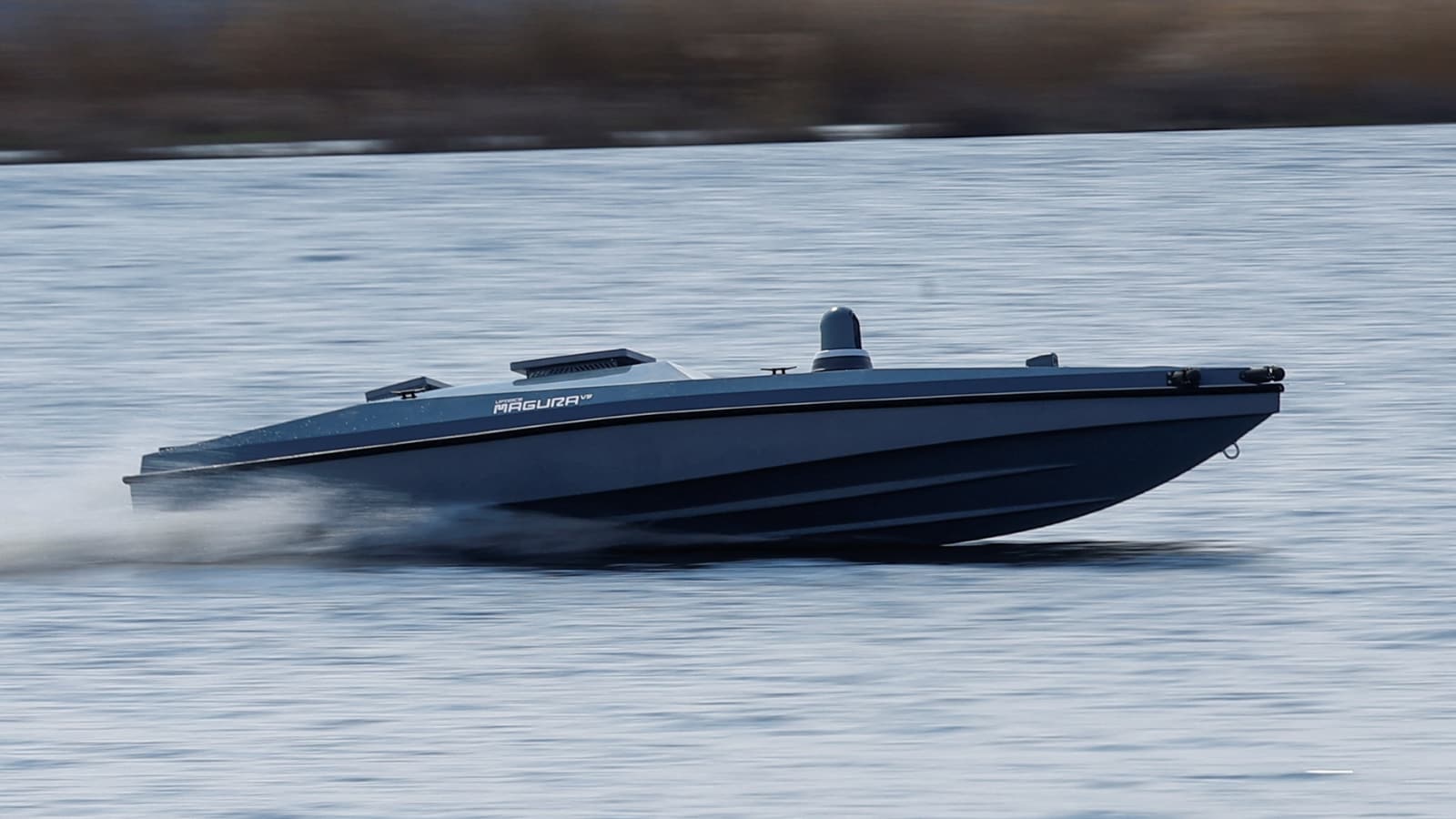
In a landmark defense agreement, Oregon-based boat manufacturer ReconCraft signed a memorandum of understanding with Ukrainian developer UFORCE to produce the battle-tested Magura maritime drone family inside the United States. Signed at the Ukrainian Embassy in Washington, the agreement lays the groundwork for mass-producing these high-speed unmanned surface vessels across facilities in Oregon and South Carolina.
The plan isn't just to build a few prototypes. ReconCraft co-founder Joe Silkowski revealed that the goal is to produce hundreds—and eventually thousands—of Magura units each year.
This isn't an academic exercise or a vague technology-sharing pledge. It's a direct pipeline sending real-world combat experience straight to American defense manufacturing.
Ukraine's Black Sea Secret Arrives in America
For two years, Ukraine has run a masterclass in asymmetric naval warfare. Lacking a traditional surface fleet, Ukrainian forces turned the Black Sea into a deadly gauntlet for Russian warships using low-cost, remote-controlled craft.
The primary weapon driving that shift has been the Magura V5 and its newer iterations.
These 25-foot unmanned surface vessels carry up to 1,700 pounds of payload, reach speeds that make them hard to intercept, and operate across ranges exceeding 300 miles. More importantly, they cost under $500,000 per unit—a tiny fraction of the multi-hundred-million-dollar warships they have crippled or sunk.
The Pentagon paid close attention.
Earlier this year, U.S. Special Operations Forces quietly tested Ukrainian Magura drones during military exercises in the Philippines, integrating Ukrainian tactics against a decommissioned target ship. U.S. forces have already started deploying maritime drones in active operational environments, including actions in the Strait of Hormuz.
Now, Washington wants these systems built directly within the domestic industrial base.
What the ReconCraft and UForce Deal Covers
The partnership between ReconCraft and UForce goes far beyond basic hull assembly. Under the agreement, both companies will share equipment, raw materials, and specialized engineering personnel to set up American production lines.
UForce isn't just handing over naval blueprints.
The Ukrainian developer is licensing its entire autonomous software stack, command-and-control tech, and operational frameworks. The partnership also extends to Ukraine's ground and aerial unmanned platforms.
"Ukraine's authorization to produce Magura in the U.S. is key," said UForce CEO Oleg Rogynskyy. "It allows the United States to apply lessons, tactics, and operational concepts developed over years of intense combat."
ReconCraft brings heavy manufacturing muscle to the table. The company already builds specialized combat vessels for U.S. Special Operations Forces and the Coast Guard. By pairing ReconCraft's industrial footprint with UForce's combat-proven code, both sides are attempting to bridge the gap between rapid battlefield modification and mass manufacturing.
How Magura Rewrote Maritime Operations
To understand why the U.S. military wants these drones, you have to look at what they've accomplished on the water.
In the Black Sea, Magura drones forced a major naval power to pull its heavy surface fleet back from contested coastlines. They didn't do it just by acting as remote-controlled explosives. They evolved into multi-mission platforms capable of shifting tactics on the fly.
Here is what the Magura platform brings to the table:
- Surface Strike: High-explosive warheads engineered to strike targets at the waterline, causing maximum flooding.
- Air Defense Capabilities: Recent Magura V7 variants carry short-range anti-aircraft missiles. They've successfully shot down Russian Mi-8 helicopters and Su-30 fighter jets over open water.
- Submarine Hunting and Reconnaissance: Outfitted with specialized sonar, newer models can search for underwater targets, tow detection arrays, and drop aerial reconnaissance drones.
- Mine Countermeasures: Configured to clear naval minefields without putting human crews in danger.
Traditional naval doctrine relied on expensive, heavily armored vessels. The Magura proved that swarms of cheap, fast, adaptable drones can overwhelm traditional defense systems.
Supply Chain Hurdles and Regulatory Reality
The agreement sounds great on paper, but turning a memorandum into thousands of military-grade drones will not happen overnight.
There are major hurdles ahead.
First, U.S. defense procurement rules are notoriously strict. Many Ukrainian field designs rely on commercial off-the-shelf parts, including components sourced from China. The Department of Defense strictly prohibits Chinese hardware or software in its supply chains. Every single component—from circuit boards to electric motors—will have to be audited, swapped, and certified with U.S. or allied alternatives.
Replacing cheap commercial electronics with compliant parts will likely raise production costs and lengthen development schedules.
Second, ocean geography matters.
The Black Sea is relatively small and sheltered compared to the massive swells of the Indo-Pacific. As UForce engineers noted, there is no such thing as a "universal maritime drone." The Magura design will need structural and propulsion modifications to handle high sea states, longer transit distances, and harsh salt-water exposure in open ocean waters.
Finally, this memorandum remains a non-binding production framework. ReconCraft still needs formal, funded contracts from the Department of Defense to begin building at scale.
What This Means for Defense Procurement
This deal signals a massive cultural shift inside the Pentagon.
For decades, military procurement favored long development timelines, massive budgets, and complex defense hardware designed to last thirty years. Ukrainian battlefields exposed the flaw in that approach: expensive assets get destroyed by cheap, mass-produced weapons that evolve every few weeks.
By licensing a Ukrainian system rather than starting a U.S. project from scratch, Washington is admitting that speed matters more than internal design ownership. They are choosing operational proof over theoretical promises.
It also changes the math for potential conflicts in the Pacific. Cheap, long-range naval drones offer an effective deterrent against large invasion fleets or blockades, allowing commanders to threaten high-value targets without risking human crews.
Essential Next Steps for Defense Analysts and Industry Practitioners
If you are tracking defense tech, military procurement, or industrial manufacturing, here is what you should monitor over the next 12 months:
- Watch for Official DoD Contracts: Track whether the Pentagon issues direct Small Business Innovation Research (SBIR) or Other Transaction Authority (OTA) grants to ReconCraft to fund line setup in Oregon and South Carolina.
- Monitor Supply Chain Audits: Pay attention to how quickly ReconCraft and UForce eliminate non-compliant hardware without driving the unit cost far past its original $500,000 threshold.
- Track Open-Ocean Trials: Look out for U.S. Navy or Coast Guard trials evaluating modified Magura hulls in high sea states, specifically around Pacific operational zones.
- Follow Related Tech Licensing Deals: Expect more U.S. defense contractors to seek joint ventures with Ukrainian drone makers across aerial, ground, and electronic warfare categories.