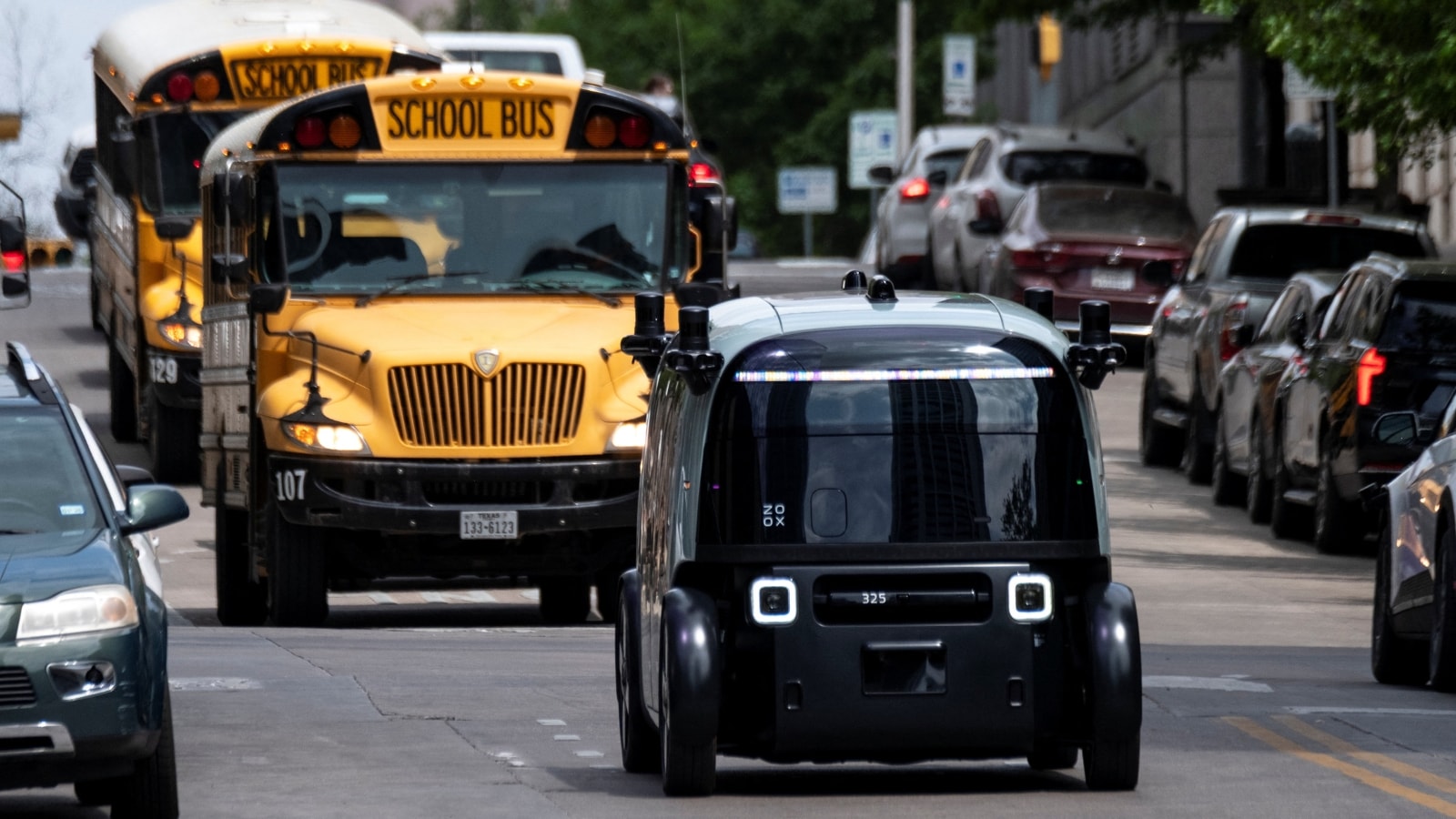
For years, the autonomous vehicle industry suffered from an identity crisis. Companies like Waymo and Tesla built self-driving software, but shoved it into standard cars complete with steering wheels, foot pedals, and traditional driver seats. Federal regulators wrote safety rules decades ago assuming a human would always be behind the wheel.
Amazon's autonomous subsidiary, Zoox, just blew past that entire paradigm. For an alternative view, see: this related article.
The National Highway Traffic Safety Administration granted Zoox a historic commercial exemption, allowing the company to charge fares in vehicles built entirely without steering wheels or pedals. It is a massive regulatory breakthrough that separates ground-up design from retrofitted consumer cars.
What Makes the Zoox Pod Different
If you look inside a Waymo Jaguar or a Tesla testing vehicle, you see a normal car interior. Zoox took a radically different approach from day one. Their electric vehicle looks less like a sedan and more like an upscale toaster on wheels, featuring a bidirectional carriage-style layout. Passengers sit facing each other on two inward-facing bench seats. There is no front or back. It travels equally well in either direction, eliminating the need to ever make a three-point turn. Further insight on the subject has been published by Engadget.
Because federal standards assumed a steering column and a windshield defroster designed for a human driver, Zoox had to secure waivers for eight separate rules. Federal regulators finally agreed that the tech inside the pod exceeds standard compliance measures. Zoox can now deploy up to 2,500 vehicles annually over a two-year period.
The Reality Check Behind the Approval
Before you book a ride across the country, understand the limits. This isn't a free-for-all wild west deployment.
The approval is temporary, heavily conditioned, and tightly capped. Regulators want an escape hatch if things go sideways. Jonathan Morrison, the head of the federal safety agency, made it clear that the government can revoke the exemption instantly if safety issues pop up. Zoox also faces strict oversight rules:
- All remote operators must be physically located within the United States.
- The company must submit enhanced reports on any crashes or unexpected road stops.
- Public deployment still requires separate state and local sign-offs.
Las Vegas is up first. Zoox plans to launch its paid service there, turning free employee tests into fare-paying public trips. California remains a different hurdle. Even though Zoox tests heavily in places like San Francisco, launching a commercial paid service there requires separate permits from state regulators.
Why This Matters for the Rest of the Industry
Competitors are watching closely. Tesla's proposed robotaxi designs also lack steering wheels and human controls. General Motors' Cruise tried and failed to secure similar exemptions for its custom Origin shuttle before scaling back operations.
By clearing Zoox, the federal government has signaled a willingness to accommodate vehicles designed purely for autonomy. It proves that regulators will look at custom pods, provided the engineering data holds up under intense scrutiny.
Autonomous transit is shifting from an experimental science project into a commercial reality. Keep an eye on Las Vegas streets over the coming weeks. The age of the steering wheel is officially on borrowed time.