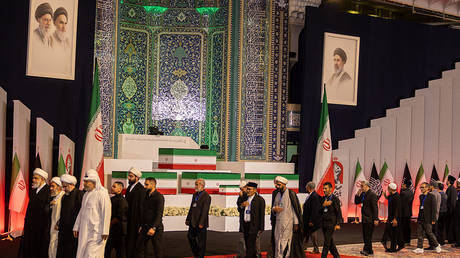
Tehran is completely gridlocked right now. Millions of people are flooding into the capital to mark the state funeral of former Supreme Leader Ayatollah Ali Khamenei. If you're looking at the mainstream news, they're calling it a standard mourning ritual. It's not. This massive gathering is a deliberate, high-stakes display of political survival after months of devastating conflict.
The public funeral comes after a four-month delay caused by the direct military conflict involving Iran, Israel, and the United States. Khamenei was killed back on February 28, 2026, during the opening strikes of the war. For months, the Iranian government kept his body hidden because holding a mass gathering under constant aerial bombardment was a logistical impossibility. Now, under a fragile ceasefire brokered by international mediators via the Islamabad Memorandum of Understanding, the regime is using this moment to project absolute stability.
The Real Reason Behind the Long Delay
You don't normally see a government wait four months to bury a religious leader. In Shiite tradition, burials usually happen within 24 hours. The sheer gap between Khamenei's death in February and this July funeral tells you everything about how dangerous the security situation actually was.
During the peak of the war, senior leadership ranks were heavily targeted. The regime couldn't risk putting millions of citizens, foreign dignitaries, and new leaders in one open-air location like the Grand Mosalla complex. Doing so would have invited a catastrophic strike. The current pause in hostilities, heavily tied to the diplomatic window around America's 250th July Fourth celebrations, finally gave Iran the breathing room to organize this week-long event.
Inside the Grand Mosalla Security Lock
Right now, the Imam Khomeini Mosalla Grand Mosque is functioning like a fortified military base. Riot police, elite security units, and strict vehicle checkpoints have completely sealed off downtown Tehran.
- Mourners must pass through multiple biometric and physical security rings.
- Vehicles require specialized government permits just to approach the outer perimeter.
- Millions of everyday citizens are walking miles on foot in intense summer heatwaves just to get near the venue.
Inside the complex, Khamenei's coffin sits alongside those of his family members who died in the same initial strike. This includes his daughter, his son-in-law, and his 14-month-old granddaughter. The state is intentionally displaying these coffins together. It handles the grief as a political tool, driving home a narrative of deep personal sacrifice to rebuild domestic support.
The Succession Drama Nobody Is Talking About
Everyone is watching the crowds, but the real story is happening in the shadows of the leadership councils. Mojtaba Khamenei, the late leader's son, was secretly named the new Supreme Leader just a week after his father's death. Yet, he hasn't made a single public appearance since.
Rumors have circulated for months regarding the extent of his injuries from the February airstrikes. State media recently put up massive billboards across Tehran showing the elder Khamenei next to Mojtaba, accompanied by slogans like "we must rise." This is a clear marketing campaign to legitimize the son's rule. If Mojtaba appears at the funeral over the next few days, experts will analyze every frame of video to judge his physical health and political control. If he stays hidden, it signals deep trouble for the regime's internal cohesion.
Geopolitical Shifts and Foreign Delegations
This funeral isn't just an Iranian affair. It serves as a major diplomatic summit for nations opposing Western influence. High-level delegations from Russia and China arrived in Tehran to pay their respects. Leaders and representatives from Pakistan, Iraq, Qatar, Oman, and India are also on the ground.
Iranian Parliament Speaker Mohammad Bagher Ghalibaf used the arrival of these foreign officials to make direct statements about the post-war reality. He noted that regional trade dynamics are changing and that joint management of the Persian Gulf and the Strait of Hormuz between Iran and Oman will continue to limit American influence. The regime wants the world to see that despite losing its top leader and suffering major infrastructure damage, its alliance network remains intact.
Where the Procession Goes Next
The funeral ceremonies won't stop in Tehran. The government has planned a complex, multi-city route designed to maximize public mobilization across religious and political hubs.
- Tehran: The body remains at the Grand Mosalla for public viewing until Monday.
- Qom: The procession moves to Iran's theological center to solidify backing from senior clerics.
- Najaf and Karbala: The coffin travels across the border into Iraq, visiting the holiest Shiite shrines to rally transnational religious support.
- Mashhad: The final burial will take place in Khamenei's eastern hometown, closing out the official mourning period.
Practical Steps to Monitor the Situation
The regional stability of the Middle East hangs on what happens during these six days of ceremonies. If you want to understand where this situation goes next, focus on three specific indicators instead of generic news broadcasts.
First, track whether Mojtaba Khamenei makes a verified, live public appearance. A failure to show up will embolden internal opposition and signal that his grip on power is incredibly weak.
Second, monitor the strictness of the ceasefire boundaries. Watch the movement of naval assets near the Strait of Hormuz as the funeral concludes. The current de-escalation agreement is temporary, and any micro-aggression during the processions could immediately collapse the truce.
Third, look closely at the scale of domestic protests immediately following the official mourning period. The regime has suppressed dissent by focusing on external threats, but the country's underlying economic crises will resurface the moment the funeral banners come down.