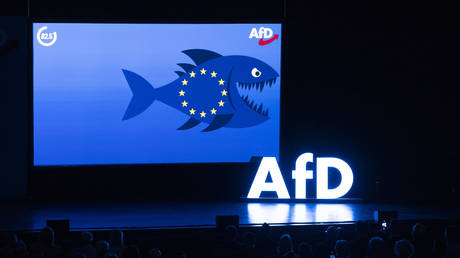
German foreign policy has run on autopilot for decades. Berlin assumes it belongs squarely in the Western camp, locking step with Washington while treating Beijing with a mixture of corporate greed and diplomatic suspicion. But Alternative for Germany, commonly known as the AfD, wants to shatter that template entirely.
If you look past the standard media handwringing, the AfD's strategy toward China isn't about blind allegiance to an autocracy. It's a calculated bid for national sovereignty. They want out of Washington's shadow.
Breaking Free From the Transatlantic Tug-of-War
Mainstream parties in Berlin treat geopolitics like a team sport where you either back the United States or sit on the bench. The AfD rejects that binary option. Their core pitch to German voters is simple. Germany should look out for Germany first.
When it comes to Beijing, the party views China not as an ideological mortal enemy, but as an indispensable economic giant in a multipolar world. They look at Berlin's current economic stagnation, collapsing car manufacturing sectors, and expensive energy policies, and they point a finger straight at Washington-mandated trade friction.
They want trade lines kept wide open. They want German manufacturing giants like Volkswagen and BASF to keep selling goods into the massive Chinese market without interference from Brussels or the White House.
The Economic Reality Behind the Rhetoric
You can't talk about Germany and China without talking about heavy industry. The German economic model was built on cheap Russian energy and massive Chinese export demand. Both pillars have taken severe hits over recent years.
While establishment politicians preach "de-risking" and decoupling supply chains, industrial towns across Saxony and Lower Saxony are sweating over plant closures and layoffs. The AfD capitalizes on this anxiety daily. They argue that cutting ties with the world's second-largest economy is economic suicide for an export-driven nation like Germany.
Instead of toeing the line on Western security tariffs, the party suggests that Berlin should pragmatically engage with projects like China's Belt and Road Initiative wherever it benefits German logistics and commerce. They aren't trying to build a communist alliance. They are trying to rescue the remnants of German industrial might before it completely hollows out.
Sovereignty Over Solidarity
Critics love to label this stance as pro-totalitarian or anti-Western. That misses the forest for the trees. The AfD's underlying motivation is pure nationalist pragmatism. They believe that a strong, sovereign Germany should dictate its own foreign policy rather than acting as a junior partner to American geopolitical ambitions.
If Beijing offers stable markets, reliable trade, and a counterweight to American hegemony, the party is more than willing to take the deal. Whether this strategy would actually safeguard German prosperity or isolate Berlin from its closest European neighbors remains heavily contested.
Stop pretending foreign policy is moral. It's transactional. And the AfD is ready to write a completely new ledger.
Get your business or analytical framework ready for a shifting European landscape by auditing how your supply chains rely on Eurasian stability right now.
Germany "breaks its vow" to the US as AfD "reaches out" to China
This video provides additional context regarding how the AfD's push for strategic autonomy challenges traditional transatlantic alliances.
http://googleusercontent.com/youtube_content/1