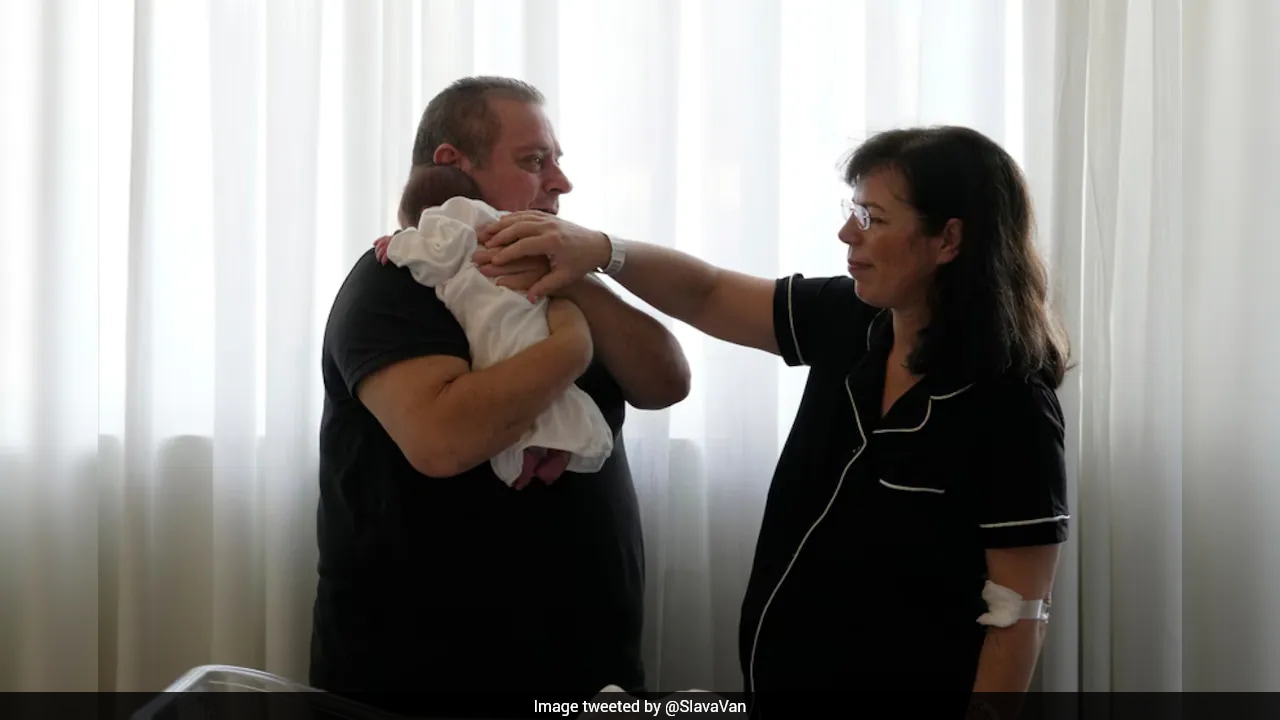
Grief changes people in ways outsiders can never quite measure. When Cristina Rapti-Tzelepi and her husband Constantinos lost their 21-year-old son Giorgos in a tragic road accident, they faced a nightmare no parent should ever endure. Instead of letting despair win, they looked back twenty-two years into a cryogenic freezer. They chose to use an embryo stored away since the late nineties.
At 54 years old, Cristina gave birth to a healthy baby girl named Georgia in Athens, weighing 3.49 kg. The story sounds like medical science fiction. It is actually a raw look at human endurance, reproductive technology, and the strict legal boundaries governing modern medicine.
People want to know how an embryo survives for over two decades. The science of cryopreservation is simpler than you think, but the medical reality of late-in-life pregnancy brings severe controversy. Let us break down what actually happened, why this case matters, and how strict laws are colliding with modern fertility breakthroughs.
The Reality of 22 Year Old Frozen Embryos
We hear stories about frozen embryos surviving decades, but how does it actually work? Once an embryo is frozen in liquid nitrogen at sub-zero temperatures, cellular activity stops completely. Time freezes for that microscopic cluster of cells.
Biological clocks stop ticking the moment freezing happens. Experts in reproductive medicine know that an embryo frozen twenty-two years ago is biologically the same age today as it was on the day it went into storage. The duration in cryopreservation does not degrade the genetic material inside a properly stored embryo.
The success rate depends far more on the freezing technique used decades ago versus today. Back when Cristina and Constantinos first stored their embryos, slow-freezing methods were standard. Today, vitrification or rapid freezing is the industry norm because it prevents ice crystal formation. The fact that a 22-year-old slow-frozen embryo survived thawing and implanted successfully is a testament to both laboratory precision and pure biological resilience.
Navigating the Legal Minefield of IVF Age Limits
Getting pregnant using a decades-old embryo is only half the battle. The real fight happened in government offices and hospital boards.
Greece enforces a strict legal age ceiling for women undergoing in vitro fertilization. The cutoff sits firmly at 54 years old. Cristina was racing against the clock. She approached her fifty-fourth birthday while dealing with the crushing weight of grief over her lost son.
Her medical team, led by Dr. Kostas Pantos from the Hellenic Society of Reproductive Medicine, had to petition special authorities just to get clearance for the procedure. The law states that turning 54 plus one day locks you out of treatment. There is zero room for medical discretion or exceptional personal circumstances.
This brings up a massive debate across Europe. As life expectancies rise and reproductive technologies improve, fixed chronological age limits feel outdated to many physicians. Fertility specialists argue that physical health, cardiovascular fitness, and uterine health matter far more than an arbitrary number on a birth certificate. Critics counter that older parents face higher risks of gestational diabetes, pre-eclampsia, and the heavy emotional reality of parenting young children into advanced age.
The Broader Picture of Late Pregnancy and Cryopreservation
This Greek case mirrors other extraordinary milestones in fertility history. Last year, an Ohio couple welcomed a baby boy using an embryo frozen for over thirty years, setting records recognized globally. Storage limits do not exist in practice. As long as liquid nitrogen tanks stay cold, embryos can theoretically remain viable for centuries.
Yet, managing expectations is crucial. Giving birth in your mid-fifties is not a walk in the park. The physiological toll on a woman's body is immense. Doctors monitor blood pressure, heart function, and metabolic panels constantly during an advanced-age pregnancy.
If you or someone you know is exploring late-in-life IVF or looking into long-term embryo storage, keep these practical steps in mind:
- Review Storage Contracts Yearly: Facilities charge annual maintenance fees. Forgetting to update contact info can result in abandoned or legally discarded embryos.
- Consult High-Risk Obstetricians Early: Standard OBGYNs might not specialize in the nuances of geriatric pregnancies. Build a team experienced in advanced maternal age before starting treatment.
- Understand Local Jurisdictions: Laws on IVF age limits vary wildly by country and state. Moving embryos across borders involves complex paperwork and strict regulatory compliance.
- Prioritize Mental Health Support: Grief counseling combined with reproductive psychology helps couples navigate the emotional turbulence of replacing a lost child with a new beginning.
Technology gives us the tools to bend the rules of time, but the emotional landscape belongs entirely to the parents walking through the fire. Georgia is here because two grieving parents refused to let their family story end on a highway. The laws might need an update, but human stubbornness will always push the boundaries of what is possible.