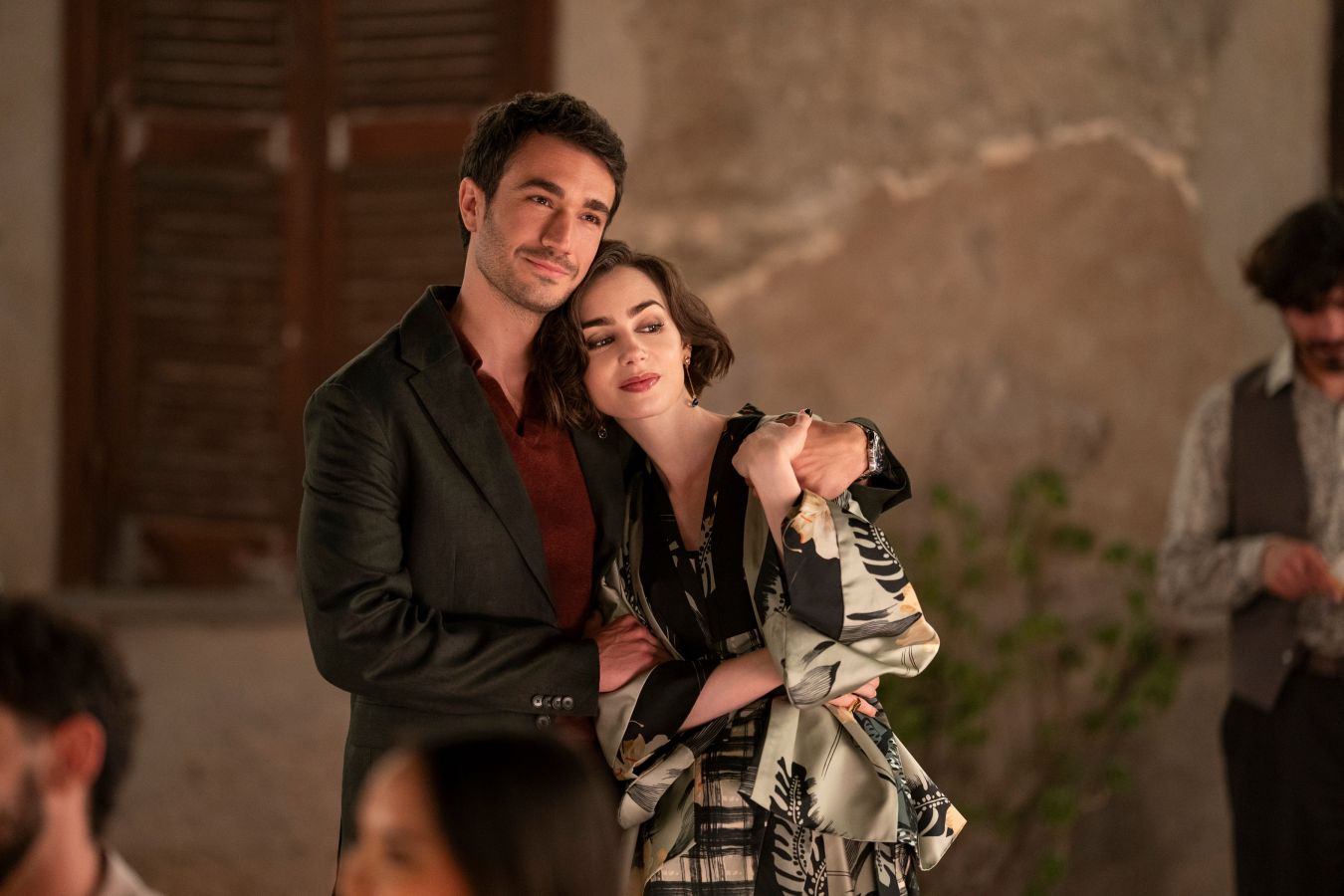
The collective gasp that echoed across social media when Lily Collins’ character packed her bags for Italy wasn't just about a change in scenery; it was a desperate gasp for oxygen. For four years, the show’s critics and fans alike have lived in a state of beautiful, sugary stasis, watching a marketing executive fail upward through a version of France that exists only in perfume commercials. The announcement of Эмили В Париже 5 Сезон isn't just a renewal of a contract; it’s a public admission by Darren Star that the Parisian fantasy has finally hit a dead end. We’ve been conditioned to think this show is a love letter to the City of Light, but the reality is much harsher. The French capital had become a gilded cage for the narrative, a place where the protagonist couldn't grow because the city itself was treated as a museum piece rather than a living, breathing environment. By moving the central tension to Rome, the production isn't just swapping croissants for cannoli. It’s attempting to break a cycle of repetitive storytelling that threatened to turn one of Netflix's biggest hits into a stale caricature of its former self.
The Death of the Parisian Gimmick in Эмили В Париже 5 Сезон
The fundamental problem with the previous arcs wasn't the clothes or the thin plots, but the lack of genuine friction. In the early days, the culture clash felt vibrant because the protagonist was an outsider, a "plouc" trying to navigate the icy waters of French corporate culture. But by the time the fourth installment wrapped, that friction had evaporated. She spoke the language well enough to get by, she understood the social cues, and her boss's disdain had softened into a predictable, almost maternal grumpiness. There was nowhere left for the character to go within the twenty arrondissements without repeating the same mistakes. I’ve watched this pattern in television before, where a specific setting becomes so synonymous with a show’s identity that it eventually suffocates the writing. The decision to pivot toward the Italian capital for the upcoming Эмили В Париже 5 Сезон is a tactical retreat from a setting that had nothing left to give. It’s an acknowledgement that the "American in Paris" trope has been squeezed dry.
Critics will argue that moving the show ruins the brand. They’ll say the title itself becomes a lie. They’re wrong. The brand isn't about the Eiffel Tower; it’s about the specific, chaotic energy of a woman who refuses to adapt to her surroundings, forcing the surroundings to adapt to her instead. Rome offers a completely different architectural and social vocabulary. While Paris is about rules, chic restraint, and a specific type of intellectual elitism, Rome is cinematic, loud, and historically layered in a way that feels more aggressive. Putting the lead in a Roman office isn't just a "vacation" for the viewers. It’s a way to reset her status to zero. She's back to being the girl who doesn't know how the coffee works or how the traffic flows. This reset is vital because the show’s greatest strength has always been its protagonist's ability to navigate being the most annoying person in the room. In Paris, she’d become too comfortable. In Rome, she’s a target again.
Why the Love Triangle Finally Had to Break
You can't talk about this series without addressing the Gabriel and Alfie problem. For years, the writers have spun a web of indecision that felt less like a romance and more like a hostage situation. One man represented the soulful, complicated dream of France; the other represented the safe, English-speaking comfort of the familiar. By dragging this out, the show risked becoming a parody of a soap opera. The introduction of Marcello, the Italian interest, isn't just adding a third plate to the table. It’s a wrecking ball designed to swing through the foundations of the show's romantic geometry. The move to Italy allows the writers to leave the baggage of the previous seasons on the tarmac at Charles de Gaulle.
The audience's frustration with the "will-they-won't-they" dynamic reached a breaking point during the last finale. We're tired of seeing the same misunderstandings played out against the backdrop of the Seine. Changing the geography forces a change in the emotional stakes. When you move to a new country, you're forced to decide who you’re leaving behind, not just physically but mentally. This shift signifies that the show is finally willing to let its lead grow up, or at least change her priorities. Marcello represents a version of adulthood that isn't tied to the toxic professional-personal overlap of the Agence Grateau office. He’s a fresh start in a city that prizes "la dolce vita" over the "joie de vivre." It’s a subtle distinction, but in terms of television writing, it’s the difference between a character who is stuck and a character who is moving forward.
The Business of the Mediterranean Pivot
From a production standpoint, the expansion into Italy is a masterstroke of global branding. Netflix doesn't just make shows; it builds lifestyle ecosystems. By colonizing another European fashion capital, the streaming giant is doubling down on the "travel porn" aspect that makes the series so bingeable. We have to look at the numbers to understand why this matters. European viewership for the show is massive, but the growth is increasingly coming from emerging markets that respond to the idealized, high-fashion version of the continent. Italy provides a fresh palette for the costume designers and a new set of luxury brands to integrate into the script. It’s a savvy move that ensures the show remains a conversation starter in the world of high fashion and tourism.
I’ve seen skeptics claim that this is just a desperate attempt to stay relevant. They point to other shows that changed locations in later seasons, often with disastrous results. They remember the times when "the gang goes to Hawaii" signaled the beginning of the end. But those examples usually involved a temporary trip, a gimmick to pad out a weak season. This move feels more permanent, more structural. It’s a reimagining of what the show can be. By treating the European continent as a playground rather than being tethered to a single city, the creators are opening up a "Darren Star Universe" that could theoretically jump to London, Madrid, or Berlin in the future. It’s no longer a show about a city; it’s a show about an American corporate ideology clashing with old-world traditions. That’s a much more sustainable engine for a long-running series than just another montage of someone eating a baguette.
The reality is that the show was dying in Paris. The streets were getting smaller, the jokes were getting older, and the outfits were starting to feel like they were wearing the actress rather than the other way around. Rome is the jolt of electricity the production needed. It brings a new color palette—warm ochres and deep oranges to replace the cool blues and greys of the French capital. It brings a new tempo of speech, a new style of flirtation, and a new set of professional hurdles. If the writers play their cards right, they can use this transition to actually explore the lead's professional competence rather than just her luck. She’s now an executive who has successfully opened an office in a foreign country. That’s a massive leap from the girl who didn't know what a "chambre de bonne" was.
Breaking the Cycle of French Clichés
One of the most frequent complaints leveled against the show by French audiences was its reliance on tired stereotypes. The grumpy waiter, the cheating husband, the lazy office hours—these tropes were fun for a season but became insulting by the third. Moving to Italy doesn't necessarily mean the show will stop using stereotypes, but it does mean it will have to find new ones. For a writer, there is nothing more liberating than a fresh set of clichés to subvert or lean into. We’ll likely see the overbearing Italian mother, the chaotic vespa rides, and the obsession with pasta, but after four years of French tropes, these will feel like a breath of fresh air.
More importantly, the change in location forces the supporting cast to evolve. Sylvie, the show’s most compelling character, is forced out of her comfort zone. Seeing her navigate the Italian business world, which operates on a different set of unspoken rules than the Parisian one, provides a secondary layer of entertainment. It’s no longer just about the American girl; it’s about a French agency trying to assert dominance in a neighboring market. This adds a layer of "Succession"-lite corporate maneuvering that has always been the show’s secret weapon. People come for the shoes, but they stay for the office politics.
We also have to consider the impact on the lead's wardrobe. The "Parisian" style she adopted was always a bit of a Frankenstein’s monster of high fashion and American kitsch. Rome demands a different aesthetic. It’s more sculptural, more sensual, and arguably more daring. The visual transformation of the characters is as much a part of the storytelling as the dialogue. By shifting the setting, the show is allowing its visual department to reinvent the brand’s identity. This prevents the "visual fatigue" that often sets in with long-running series where every episode starts to look like the one before it.
The Myth of the "Pure" Emily in Paris
There’s a segment of the audience that feels betrayed by the move, as if the show is abandoning its roots. They want the lead to stay in her little corner of the Place de l'Estrapade forever. But that desire comes from a place of nostalgia rather than a desire for good television. Characters that don't move, don't change. If she had stayed in Paris, the only possible ending would have been a wedding with Gabriel, followed by a slow descent into a domesticity that doesn't fit the show's high-energy DNA. The move to Rome is an escape hatch. It allows the show to delay the "happily ever after" in a way that feels organic rather than forced.
The genius of this pivot lies in the realization that the "Paris" in the title was always a state of mind rather than a GPS coordinate. It represented a specific kind of American aspiration—the desire to be more sophisticated, more romantic, and more stylish than one’s origins. That aspiration doesn't disappear just because the backdrop changes. In fact, it’s reinforced. By showing that she can take her specific brand of American optimism and apply it to a different culture, the show validates its protagonist in a way it never could if she stayed put. She isn't just a girl who got lucky in France; she’s a professional who can win anywhere.
A New Era for Modern Escapism
We live in a world that is increasingly cynical about influencers, marketing, and the "aesthetic" life. This series has always been a lightning rod for that cynicism. Yet, its resilience is undeniable. It thrives because it leans into the absurdity of its own premise. It doesn't ask you to believe it’s real; it asks you to enjoy the ride. The Roman chapter is the next logical step in that journey. It’s a bigger stage with higher stakes and brighter lights. The show is finally admitting that its true subject isn't France, but the relentless, colorful, and often exhausting ambition of its lead character.
As we look toward the future, the shift to Italy feels less like a detour and more like a destination. It’s a reminder that even the most well-worn stories need a change of scenery to survive. We don't need another season of staring at the same cafe table. We need to see what happens when a woman who thinks she has conquered the world realizes there’s a whole other empire just a few hours south. The city might change, the coffee might get stronger, and the men might get more expressive, but the core of the show remains a defiant celebration of being "too much."
The move to Italy isn't an admission of failure; it’s a brilliant tactical pivot that saves the show from its own repetitive success. By trading the structured elegance of France for the beautiful chaos of Rome, the series ensures it remains the most talked-about fantasy on television. We've spent four years watching a girl try to fit into a city that was designed to keep her out; now, we get to watch her build something new in a place that has seen empires rise and fall for millennia. It turns out the best way to keep the Parisian dream alive was to leave Paris behind.