History books love to push a clean narrative about human civilization. First we gathered nuts, then we farmed wheat, and eventually we figured out how to make art after we built cities. Sites like Karahantepe in southeastern Türkiye smash that tidy timeline into pieces.
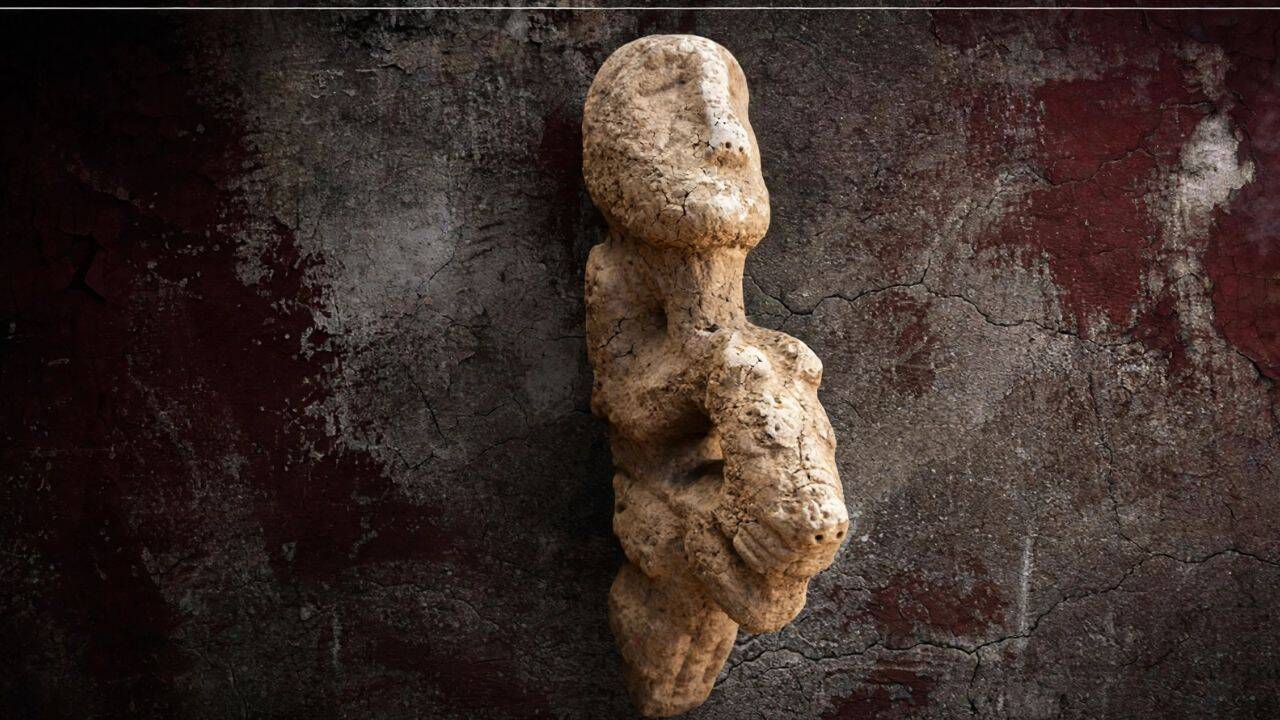
Turkish Culture and Tourism Minister Mehmet Nuri Ersoy announced the unearthing of a 70-centimeter-high stone sculpture dating back roughly 11,000 years. It depicts a human figure sitting right on the back of a leopard. If you think prehistoric humans spent all their time hiding from predators in caves, this discovery forces a complete rethink.
Inside the Stone Bench Discovery
Archaeologists didn't find this artifact buried randomly in loose dirt. It sat on a stone bench running along the interior wall of a small, circular structure roughly three meters in diameter. The floor underneath was carefully paved with flat stones.
This specific placement matters. The sculpture stayed exactly where its makers left it over ten millennia ago. It wasn't tossed into a trash heap or washed downstream. It was part of the room's permanent architecture, suggesting a deeply intentional ritual purpose that we can only guess at today.
Professor Necmi Karul and his team have spent years unearthing secrets across the Şanlıurfa region. Karahantepe sits roughly 30 kilometers away from its famous sister site, Göbeklitepe. Both belong to the Taş Tepeler (Stone Hills) project, a massive collection of Neolithic settlements rewriting global archaeology.
Challenging the Human Animal Dynamic
Previous finds at Karahantepe featured striking animal carvings, but this piece hits differently. Earlier excavations revealed sculptures where humans carried snarling leopards on their backs. Those pieces portrayed tension—wild animals baring their teeth, caught in a struggle or an uneasy standoff.
This new composite sculpture flips the script entirely. The human sits on the animal.
Does this mean early Neolithic people domesticated big cats? Absolutely not. You cannot ride a wild leopard like a domestic horse.
Instead, experts look at these carvings as windows into ancient mythology and worldview. The people of the Stone Hills lived alongside apex predators. They didn't just fear these creatures; they wove them into their spiritual systems. Placing a human figure mounted on a leopard points to complex storytelling, totemism, or shamanic traditions that existed long before written language.
Why the Taş Tepeler Region Keeps Stunners Coming
If you've followed prehistoric archaeology over the last decade, you know Anatolia is the center of the academic universe right now. Sites like Karahantepe prove that large-scale social organization happened before agriculture fully took over.
Building these monumental circular chambers required coordinated labor, engineering skills, and deep cultural alignment. The inhabitants were hunter-gatherers transitioning to settled life, yet they possessed artistic capabilities that rival later civilizations.
When researchers clean dust off a 70-centimeter stone carving in an excavation trench, they aren't just finding a neat relic. They are pulling up raw evidence of how humans first made sense of their place in a dangerous natural world.
Keep an eye on the ongoing excavations in southeastern Türkiye. Every season yields architectural anomalies and sculptural styles that leave veteran researchers scrambling to update their theories.